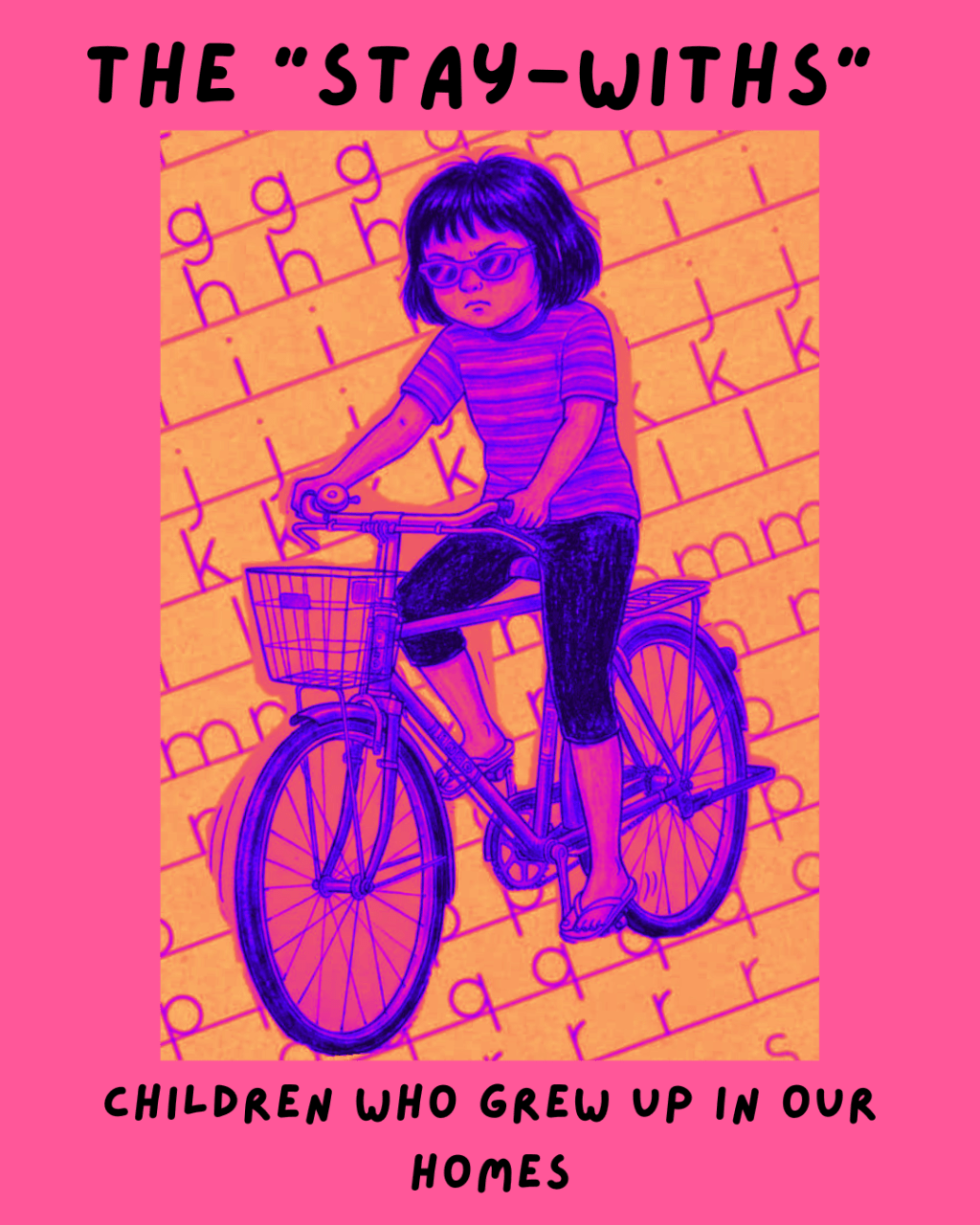
Kho-khol and I sat shoulder-to-shoulder in the train to Delhi, two girls measuring life from the same height. I was informed, with the cheerful lightness adults reserve for major lies, that she was coming home to be my friend. Her cheeks flushed (“nothing a coin-sized dollop of Lacto Calamine couldn’t fix,” said my mother) and her entire life packed in a blue polythene bag.
Having a friend who was always at home seemed like a fine idea, until I realised Kho-khol’s homesickness would be a problem. She stared out of the window and would go on and on. Sometimes it was about her younger sister who couldn’t end a song. The chorus ended with the same melody as the first line, thus bridging the beginning and end in a neverending loop. She talked about how she could throw a stone and it would land on her grandparents’ house. Then it was something about a papaya tree or a chicken coop. “Do you ever go to school?,” I asked with exasperation. “I only studied till class 2,” she would tell me.
After her was the girl with a perpetual grin on her face, who would tell everyone she became stupid after a tractor fell on her mother, as she watched body parts splatter all over the dusty road. Another claimed she was a victim of false advertising; she had expected to live in a mansion when she heard she was going to Delhi – her imagination drawing from Hindi serials. And then there was Thian, who I got along with because she dutifully performed her task of lying to my mother that I went to school, even though she watched me change out of my uniform behind a tree.
While we were distantly related to some of these pre-teens and teenagers, some were strangers sent by parents from rural villages in our home state. In our language, the verb om-pih literally means ‘to stay with.’ It is an elastic phrase: your mother might ask you to om-pih an ailing sister, just as they might ask you to om-pih a baby while they go use the toilet. So, when someone does domestic work around our house and lives with us through it, our polite lexicon gently smoothes things over to say we om-pih or “stay with” them.
Kids from the neighbourhoods in Delhi often referred to our “stay withs” as “maids”. In my mind, there was no distinction either. However, I would find adults from other cultures joking about our stay-withs being my mother’s adopted child because she served us snacks at the same table and was often breaking up our fights. How mortifying that a “maid” and I have the same mother. What if my classmates found out I share not only a room but a bed with my “maid” – as though we are equals…
From the time I was 7 till I turned 17 and left the proverbial nest, we always had a child or a teenager at home to see me off to the bus stop, and do chores around the house. In return, they had housing, food, access to TV time and books, and salaries – most of which was paid to parents in the villages. It’s only when I became an adult that I saw them for what they were – children. And so, I asked my mother, “wasn’t that child labour?” She responded, “child labour is exactly what it is.”
Hailing from faroff villages with schools that only taught till certain grades, many of our own parents spent their early years living near better schools. These were mostly located in towns and cities, so they had no choice but to board with family members or family friends they had never met before. There are stories of wards showing lifelong piety to their generous host families for genuinely changing their lives… as there are of adults beating kids until they ran away. It may have been the only way they knew to discipline children or perhaps, they saw the children as burdens.
The community seems to view these deals of “fostering” kids as the duty of a contributing member of society. If a brother is more well-off than the other, the wealthier one must take the other’s children, providing them with the same opportunities as his own. This has always been the way – and does not only apply to blood relatives. Kinship ties – the same clan or even the same tribe – can make you socially liable to taking in dependents if you have room to spare.
I would like to think this is how it all started. That a community decided to adopt this system with a simple understanding: that households were taking responsibility for someone else’s child because they had the means.
Many of these young stay-withs were brought to my grandparents’ door by relatives who did not have enough to feed them. Some orphaned, some abandoned after a parent’s remarriage, some with an alcoholic parent and some simply too poor. Some were so small they had to be turned away, even if it meant going back to hunger and idleness until they were old enough for laborious daily-wage work or to marry. And yet, their fate could always be worse – as things turn out with any unregulated type of work.
Over the years, I’ve wondered and even heard from the kids who came and went. Stories range from those who persevered and finished high school, found salaried work in hospitality, “married up” and even kept their own om-pihs. Just as many retreated homewards, where things have moved little since they first left as children. Still in the hands of fate, they may find themselves at tearful goodbyes with their own kids because a single mother in a metro city relies on cheap labour.
And yet, there is still the communal understanding of the village: those better off are duty bound to take care of those who are not, especially when the system fails – which it often does. Perhaps that is why good people, who recognise that work is work and children are children, also keep this system alive:
“Because if I don’t take them in, who will?”



Leave a Reply