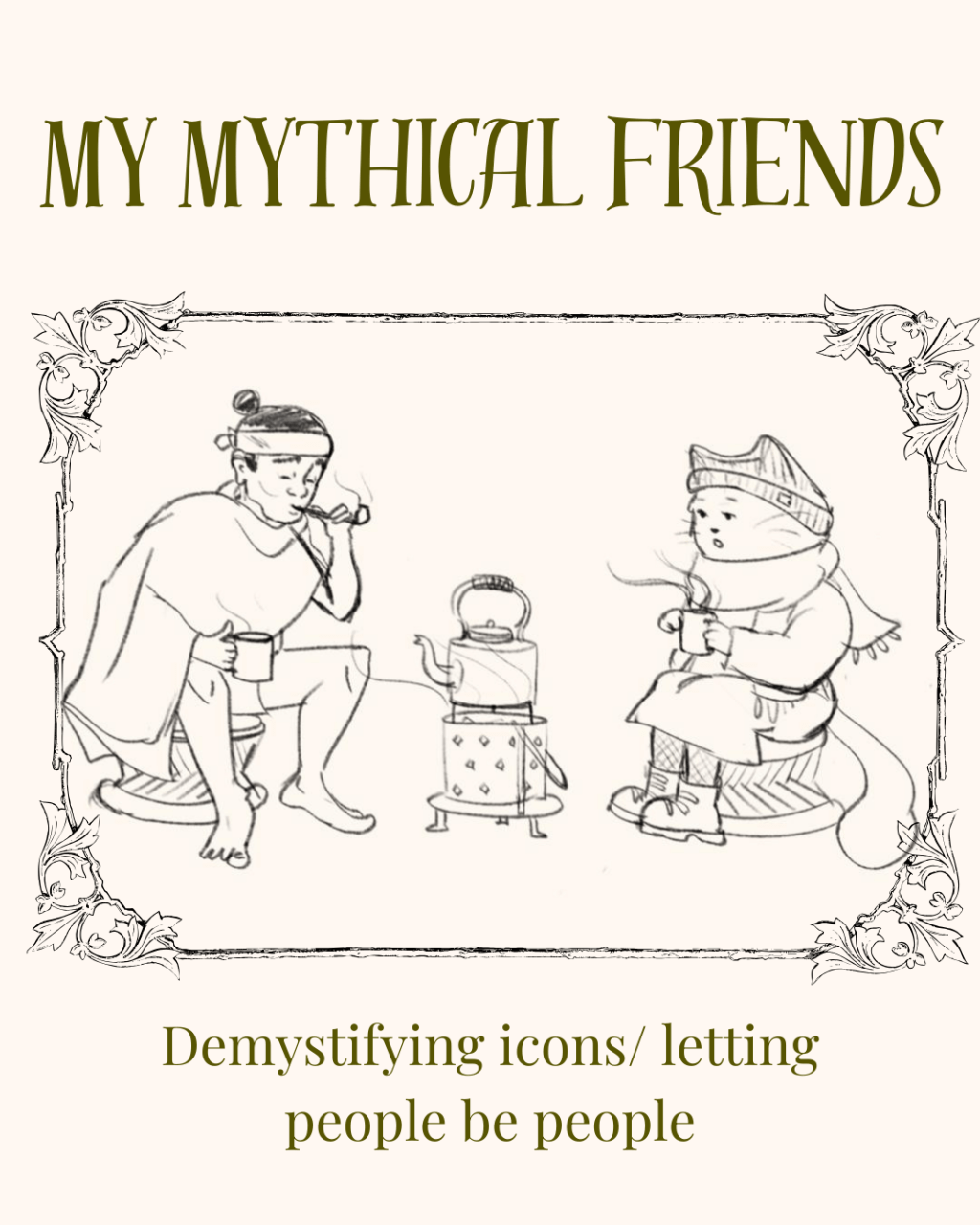
Life, lately, revolves around unlearning everything that we thought was obvious until yesterday. This is not the space to openly question who international terrorist organisations are [really] working for, but I feel [relatively] safer deconstructing the unquestioned reverence for cultural icons. This may be a reverse tokenism of sorts – I do not recall there being an equivalent for it, and calling it an exercise in platforming “lived experience” makes it sound much too serious. In effect, what will follow is somewhat like my teenage diary entry, which accidentally borders on cultural commentary.
In the last three years, I have been dabbling in cultural documentation work and, naturally, interacting with cultural bearers from around the heavenly Himalayas. A lot of the work is anchored around telling stories from the view of community people, which often means finding the beauty in ordinariness, everyday struggles, humour etc.
Then there is romance and philandering, which are deemed less PR-fit or institutionally-friendly. Unfortunate, since this seems to be the common language between all human communities.
One of the most iconic and, frankly, overused representative image of the mystic Himalayas are the smiley monks – often pictured in action as they chant away quietly or are caught mid-run in the compound of an ancient monastery. The first time I was curious about the internal lives of monks was perhaps as a college student, when I would elbow my friends, asking them to look at the limited-edition branded sneakers (not even available in the country) and latest iPhones that the monks in the Tibetan colony would fashion. My friend Chauda (nickname) would once lie to me that his bald cousin is a lama – said that if I wake up at 5:00am, I could catch him cross-legged and meditating, levitating about 3 feet in the air.
Last month, I made friends for the first time with young monks from one of the most famous monasteries in the country. People around us treated them with reverence, unsure of whether to clasp their hands together and maintain silence, whether “hello” was too casual of a greeting for these men of divinity. I was having my morning coffee, when one of them swaggered up to me and asked me to come in to share some Danish. As we talked about life in his hometown, the boys relished the sweet treats from a nice bakery in Khan market, even clumsily dropping some on the floor. Why did it seem sacrilegeous that I was sharing coffee and cakes and referring to them as “bro”, as I do with most everybody?
Two of them – roommates – spoke in a way that I would describe as bro-coded and it was apparent that one of them was the butt of jokes. As they talked about their studies, they shared how he was the most experienced of them in studying sacred mandalas – after all, he had flunked exams and had to give it over again. There was easy banter, conversations around rock music and also shy glances passed in that room – was I imagining it or are monks allowed to be flirtatious? “Come over,” joked one of them. “It’s after 10pm! What would we do!” I responded with genuine curiousity, and a sense that I was getting teased by a thinking-feeling dude rather than a static emblem of purity and chastity.
As much as we like to hate social media for commodifying and curating life, I appreciate it for the varied alternative ways of life across social, economic, cultural spectrums. There is the whiplash of watching the lives of teenagers living through war and famine to seeing the obnoxious shopping hauls of billionaires, but there is also the in-between grounding content concerning the oddly-specific girlhood experiences or monks playing basketball or participating in reel trends. And straight from my source and new friends, were the gym photos of sculpted monks, who wore cool fits in cobblestone footpaths of Paris (why are you not perpetually in your robe!), sprinkled among spiritual messages of impermanence and loving helpless beings (cute pups).
Failed exams, getting told off by seniors for clumsiness/playfulness, ambitions of a doctorate, wild crushes at the wrong time asking you to remind yourself that romantic feelings pass – there is not much of a difference in the way our lives go.
As I said goodbye to my 20s last week, my idea of utopia is sharpening – and it would include community living with lots of silence and predictability, with some socially-accepted periods of not talking to anyone… Perhaps, a few international work trips and ample time to strengthen my body and mind. If I could live like that, I would look smiley and at peace in pictures too, had someone caught me mid-run in a monastery compound.
I joke, of course, and lack the faithfulness to become the next to be ordained into the brotherhood or sisterhood – personally, a shaved head and unquestioned respect for the office seem like unlikely paths for my awakening. In fact, an early wake-up call might be all it takes for me to pack my bags and go home.
Then, there was another incident, where I came to revisit an old friendship with a future tribal chief. In my community, tribal chiefs mostly wear your regular kameez, trousers and boxers or perhaps even briefs – and almost never the ceremonial attire that would make it so much more interesting. Some work regular government jobs and live in metro cities, only holding the title to collect tax from people. But that is a topic for another day.
There are other communities in neighbouring states, who have done a better of preserving some of the old ways. I knew someone from one such a community. In order to protect his identity, let us call him Mephistopheles.
A hereditary prince of a village, coming from a long line of politically-influential men, this devil incarnate wore the humble garb of your everyday 20-something in the 2010s – the first hint I observed of his immense family wealth was the bottle of Blue Label whiskey casually lying on the glass centre table of his father’s room in a government building.
As I was researching “dying” cultural practices, I came across a few interesting ones from a border village. Initiation ceremonies with age-old micro practices, coronations and such. That’s when I saw – the now-30-something guy from my past, who hadn’t aged a day since I last saw him -being venerated as a princely leader of the people. I believe, the evil do not have shame or guilt and thus sleep well enough every night to maintain that glow and supple skin. That, or the man sucks up the youthful aura of girls he has charmed and tricked all his life before dumping them when they near the haggardly age of 23 – not unlike the actor of Titanic.
Watching it all, I let out a quiet snort – seeing one of the worst men I know end up framed as cultural artefact, carefully handled and politely unquestioned.
BUT – preservation, as I am learning, is rarely about goodness or truth. This is not a story about saints or sinners, nor a commentary on faith gone wrong or traditions in decay. It is about the fact that icons are rarely who we imagine them to be – whether they are monks in cool sneakers or princes with clean consciences and bloodless hands. Unlearning the Himalayas, for me, has meant letting go of the need for purity altogether, and learning to sit with the far messier, far funnier truth of being human.
Also, as I am learning from my new friends, I will leave the prince’s future to karmic retribution.

 The Balled-Up Paper
Leave a comment