Homesteading as a trend, “tradwife” as aspiration and community involvement as the secret to happiness – is the internet selling a rural fantasy to the youth, a magic cure to modern alienation? Many students and young workers are making content out of homesickness, creating reels with backdrops of the grey, grim city hustle and swarms of people, contrasting with the greens and blues of their idyllic countryside homes.
For some time, I have mostly witnessed women preferring the freedom that the city affords us, with many of them growing into their unfettered selves in urban spaces. Not just women, but the queer kids from small towns or the unlabelled ones who were simply predisposed to not doing things the way others did.
This year, rural Japan was overwhelmed with an unprecedented number of tourists flocking to experience the community-led responsibility-centred rural Japanese way of life. Where everybody from the village is bound to help each other, cleaning duties are shared equally, neighbours go to others’ homes with surplus farm produce while the other would pack them a parcel with leftovers from lunch. And of course, while one may prefer Japan simply for being extraordinarily pretty and Instagram-worthy, the collectivism that these tourists seek isn’t a novelty. I would think this is how most rural and indigenous communities function.
Zo society is no different. In Mizo culture, the philosophical ethos of putting the community above self is called tlawmngaihna. It is why Mizos don’t honk needlessly, why they thank every car that gives them way on narrow hilly roads and why people pour out of their homes to help in times of crisis. For the sake of understanding, this “untranslatable” term finds a close parallel in the concept of dharma, as tlawmngaihna is, in its essence, duty. It is the duty to help without being asked, to never be a burden or bring shame to the community.
Some have been able to name it – tlawmngaihna, dharma, or simply the instinct to put the collective before the self. But many communities live by these unwritten rules without ever calling them anything at all. These rules have seen us through war, famine, disaster and hardship – but not without cost.
Individual comfort is often collateral, and worse, so is individuality.
When the collective is put above the individual, those who are wired to think, speak or do things a little bit differently become dangerous to social harmony. Then, to uphold your duty is to hide a part of you and to conform. To conform is to hurt in a socially acceptable way: to be angry without showing it, to ache without complaint, to hide under shame, to let the poison settle in your bones. Where the sound of pots and pans crashing behind closed doors signals a husband’s rage, nobody knocks as that would bring disharmony with neighbours. The husband and wife will anyway be seen arm-in-arm at church the next day – her silent resilience is the dignity of society.
Punishment itself is not always about jailing someone who fails to conform, but isolation and removal from society’s mind and eyes. It is perhaps why addicts go to the cemeteries at night, banished from the living.
Accountability, which keeps behavior in check among close-knit communities creates a mood of surveillance, which can translate into constant pressure to “perform” to “show up” – and to show up “acceptably”. Some people shut down and others break loud. They’re labelled “abnormal” or “possessed”. The angry eldest daughter becomes a madwoman by the family’s standards – who would marry a madwoman?.
The longer you lock a free bird, the more withdrawn it gets and the madder it gets of boredom, sometimes banging its head to the point of mutilation.
We have a saying: “A person may be born a little mad, but it is the community that turns them completely mad.”
I remember the so-called “village idiot” – the first cross-dresser in town, they say. “Cross-dresser” was simply a trope and a circus act decades before a generation would find newer words from queer theory. When he died a few years ago, the same community that ridiculed him gave him a respectful farewell. It was as if kindness only arrived when kindness was no longer a matter of courage but of conformity.
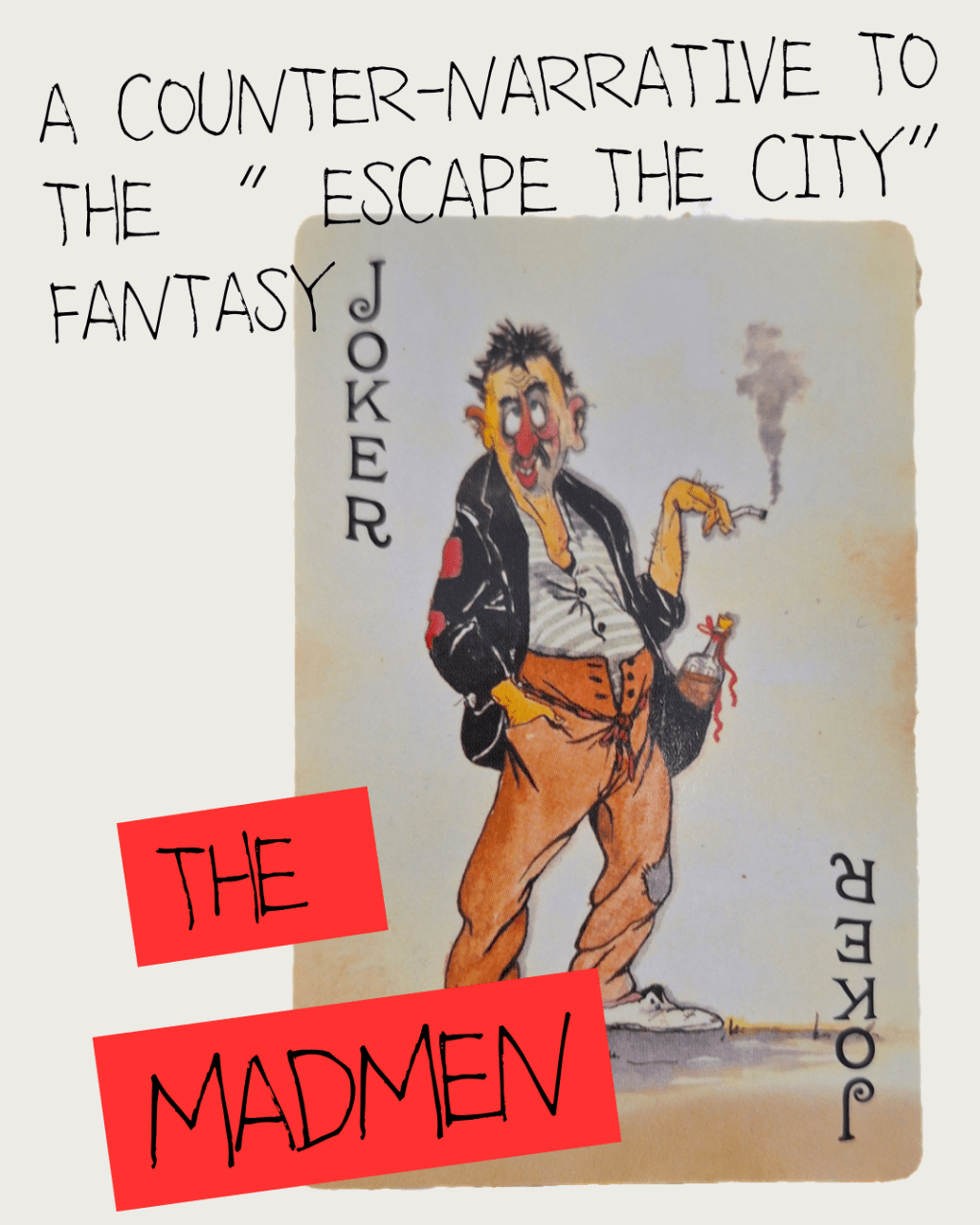
Artwork: Mario Miranda’s Joker playing card

 The Balled-Up Paper
Leave a comment