One day at work, I found myself sitting across some youths who had re-created the sounds and calm of a forest right in the middle of one of, if not the most polluted cities in the world. It was nice – the sound of a babbling brook and rustling leaves without the eerie noises, humidity, muddy shoes and the instinct to find a weapon in case a leopard jumps out – you know, an ordinary jungle experience.
The truth is, I am terrified of the jungles – it does not remind me of peace and beauty but rather of danger and nature’s wrath. Avoiding the wilderness made me feel guilty that I have become too urban, too spoiled – too de-rooted? uprooted? This is until my mother told me the jungle is supposed to be scary and that is why our forefathers would worship everything that moved and didn’t move. It is why they would invoke elements of nature, asking for protection against the mysterious and unrelenting wrath of unseen spirits that lingered through the night until daybreak. Romanticising nature and ignoring what it is capable of would be more unnatural to my biological evolution, she said.
“My forefathers worked so hard so we could escape the jungle, and you are sending me right back to it!,” I joked with one of the indigenous youths who had set up the experience. It didn’t land, and he told me with utmost seriousness that he won’t leave the jungle ever and neither would his descendants. I scrambled to explain that I am a fan of grassroots workers while pointing out that I am an anti to myself, so this is more of a self-deprecating commentary on the irony of my job – one that requires me to return “home” to find relevance in urban spaces. My voice trailed off because I began to feel my justification lost to contradiction, and my mouth doing the thing that my brain does. So instead, I shut up and we sat in a tense silence, in a recreated jungle – in the middle of the most polluted city in the world, trying to discuss ecological conservation.
At work, like in life, I always find myself in an awkward position, sitting somewhere the middle of different belongingness-es. Further from grassroots, at a safe distance but in proximity to elites – both my own failing. Urban, mostly (I’ve recently been travelling with a box of almond milk to the mountains to avoid the gastrointestinal risks of consuming dairy). In corporate settings, people are uncomfortable when I speak too much in policy. At homestays, I will gleefully steal a moment to share the delicious organs of an animal with our hosts, behind the backs of my fellow urban travellers who might not be comfortable with bloody delicacies on the dinner table. Sometimes I get caught offending community members who, like a few cousins, are irked at my dependence on the urban decay and sterile isolation of the polluted city. I like the taste of home but only in limited doses. That is my privilege of access.
What gets called “field exposure” for one group is simply life for the other. Rural fellows, community storytellers, craftspeople, and documentarians do the heavy lifting – the research, the cultural immersion, the labour. Then you have the urban artists who often arrive later, harvest aesthetics or themes and get institutional credit.
In cross-institutional cultural programmes, you often see two kinds of reactions to discomfort. For those working from the ground, who live with their subjects throughout the year and walk to reach phone signals to edit and upload, discomfort is assumed and even welcomed. For others, used to sleek residency studios and city-centre panels, modest arrangements feel like a step down or even an insult to their imagined importance.
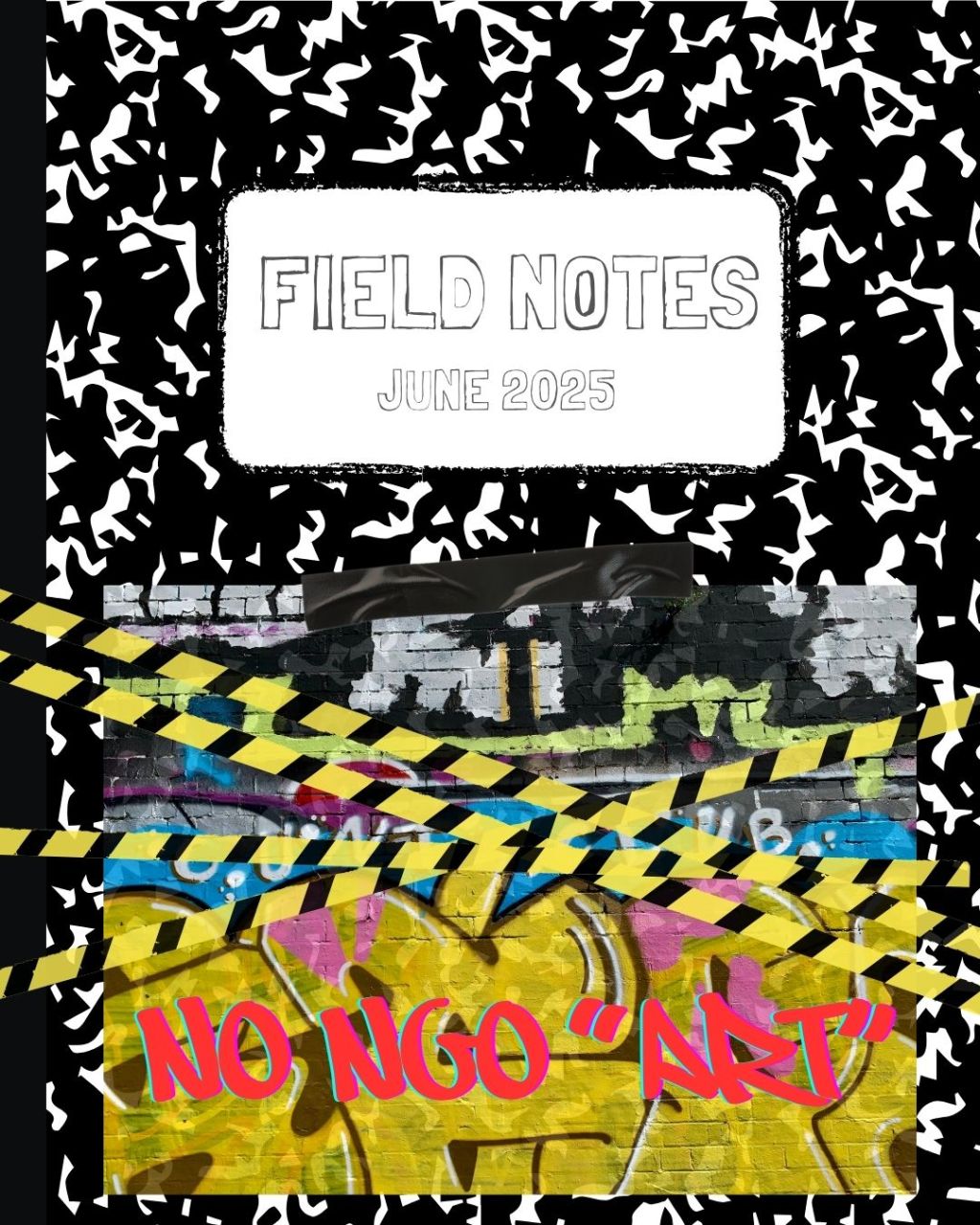
Many times, their entry and resulting perceived success is a result of the Endogamy of Access. Fellowships, residencies, galleries, they circulate within tight social networks. Artists beget artists, curators promote friends. There is a pattern of partiality towards people who can afford to play with art and play it safe, whose lineages protect them from the very systemic issues they seek to critique. New entrants without lineage or pedigree – I wouldn’t know where they are. And when they do appear, there’s often a quiet contempt for anything “too NGO,” “too CSR,” “too popular,” “too literal.” As if the presence of clarity, or community engagement, somehow pollutes the ‘pure’ idea of art.
That’s caste thinking – or rather it creates a caste of interpreters whose language, aesthetics and networks gatekeep what counts as “intellectual” or “worthy.” Why aesthetics are only valid when explained in English. Why discomfort is only palatable when it’s abstracted into metaphor. Why the art world prefers the artist to be detached. Does detachment translate better into the abstract and are lived realities too messy for the jury?
Like the middlemen, I criticise from a safe distance, yet benefitting from this system. Call it integrity or being too pussilanimous to look in the mirror – these are the moments I want to turn back and exit. To where caste is not an ancestral truth. Where there’s beauty in the utilitarian and suspicion for curation and disdain for performance. Sometimes a little too much. And so we return.
A new crop of artists from the margins who’ve finally broken into the insular art world. Honest, stylish, radically aware, their presence could be the antidote but the infrastructure still insists on filtering their voices. It asks for a little polishing here, a little pedigree there. A Westernisation, or a Sanskritisation. A sanitisation, a glamorisation, a post-colonial-museum-ification. Whatever gets the grant, really.
 The Balled-Up Paper
Leave a comment