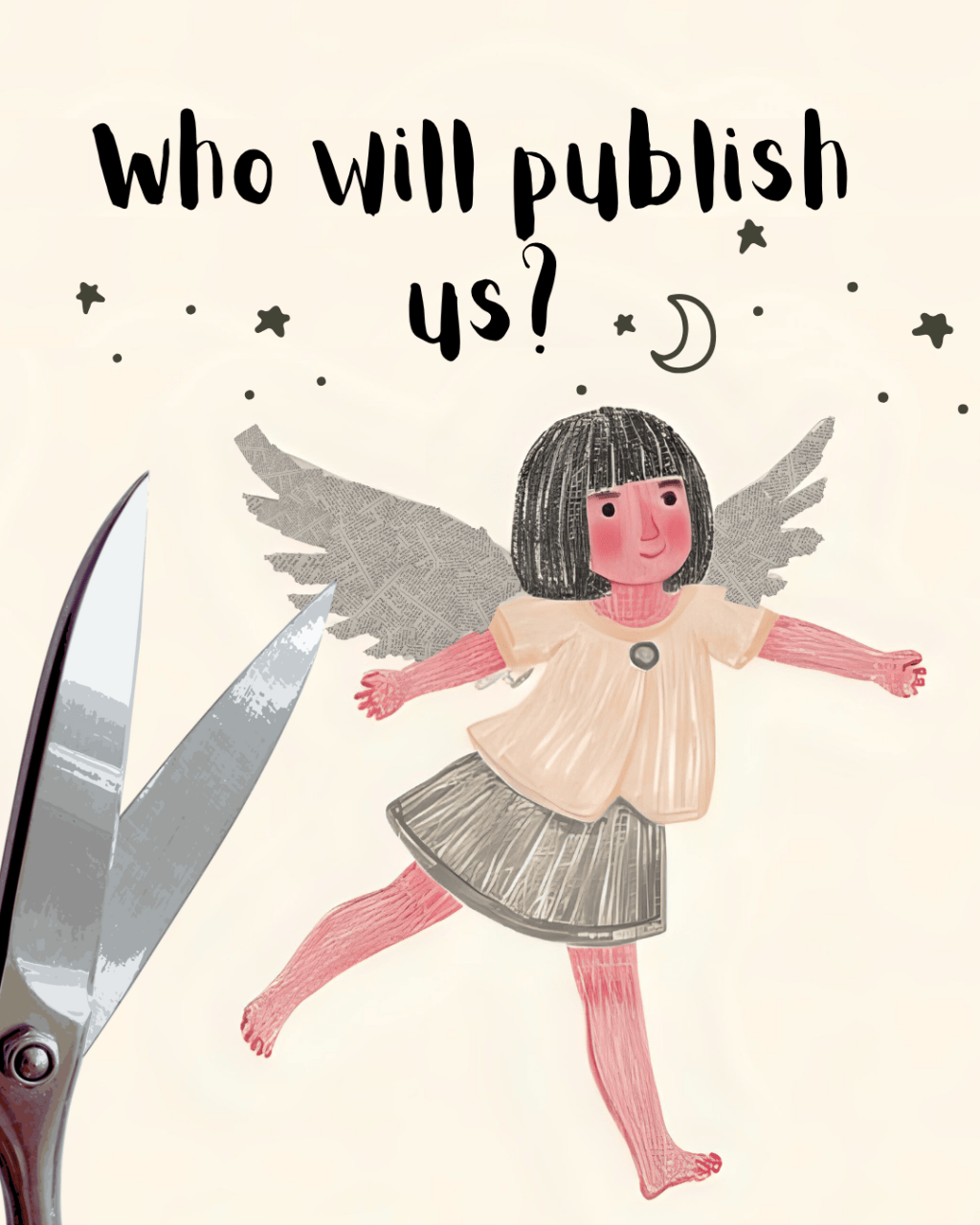
I remember the first time I hugged a book to my chest.
I was about nine years old and I had just put down a book called ‘The Illustrated Mum’ by Jacqueline Wilson. A children’s novel, with an attractive book cover that reminded me of sunshine and pretty flowers – “just the kind of feel-good story I need,” I had thought as I brought it home from the second-hand book sale. I was caught off-guard as I turned the pages, learning about the titular mom character with tattoos that covered her entire body, who drank when she was not hungover and grumpy, who was surely mentally ill and kept making bad choices in men. It was brutal – especially when written from the child’s point of view.
The next I felt the need to hug a book was when I turned 17 and read Chinua Achebe for the first time as part of a post colonial literature class. Even then, I only understood post colonialism as a time-period made up for convenience. It was a textbook phrase and not the freeing of writers coming out of the shadows of systemic erasure and silence.
A few months earlier, I chanced upon a series of anthologies based on the Northeast states, published by Zubaan – beloved for all things feminism and anti-caste in Northeast India. Of course, I picked up the writings from Manipur first – out of curiosity but almost to confirm my bias. As my finger slid down the contents, I realised there were some 30 essays authored by Meitei women writers, and one Tangkhul Naga writer added at the end – kind of like an afterthought, optically speaking.
I went over and over the pages again, looking for one token Zo or Kuki name, flabbergasted that the feminist darling publisher could make such a faux pas. It is understood that there are only three large communities in the state (Meiteis, Nagas and Kuki/Zo). And it is expected that one community would have a monopoly over the narrative, but completely erasing one community was surely not expected from a progressive space! It was 2019, so I assume the literati, including well-read feminists, were yet to be awakened by the shattering illusion of one united Manipur. Perhaps, tribal hill writers did not want to be clubbed with valley writers. Maybe they were asked and declined.
Even in those years, Manipur’s hill people were reluctant to participate at Northeast festivals to perform with the Meiteis as a single entity, and one community in university even demanded a separate dance sequence that one year. The hill tribes, in that way, were often viewed as unnecessarily fussy. It was always a uniquely complicated process for this one state to choose the music, dance, dress or language to represent itself, with a perpetually high chance of a stinker on the Whatsapp group by someone who did not feel they were represented enough or correctly. I didn’t quite understand the animosity in 2019, when some of us had only begun to play into the “coexistence” narrative that our parents’ and their parents’ traumas wouldn’t allow.
“Translated from the Manipuri” the top of the essays read. I snorted, remembering it was 2019 when one Manipuri man was genuinely shocked when I said hill people do not identify with “Manipuri” because everybody knows that it just means “Meitei”. His solution was for me to start speaking and embracing “Manipuri” to avoid feeling any “otherness”. I went over the introduction again, looking for some glimmer of hope, let out another snort when I read one vague line “Naga women praying and marching together for peace”, sandwiched between the work of fierce Meira Paibi vigilantes and the fallen hero Irom Sharmila, to describe the contributions of “Manipuri” women. No mention of Kuki or Zo women – maybe the thickness of the Mizoram book (double the other books) written by their cousins and close kin was supposed to make up for lack of Zo voices, but that felt too lazy to even entertain in thoughts.
I couldn’t bear to read most of the work despite trying to keep an open mind. Not because I disagreed with the tokenisation of Meitei women in anti-AFSPA movements or their invisibilisation in a deeply patriarchal society. What made me give up was the feeling with every line that someone is speaking over me. Intersectionality ended where hill tribal narratives began. Here, it suggested the main themes were racism, patriarchy, purity and pollution, but it was far too long before the question of caste violence against tribal bodies by men and women even began.
The book felt foreign – almost oppressive. Ironically, a book written by an Igbo from Nigeria felt more like home.
My Christian faith was already shaken when I was in college and got my hands on “Things Fall Apart”, which was my decolonial awakening to histories that the coloniser’s religion had erased. I looked for texts about my past and was recommended historical accounts or even theological books, much to my annoyance.
Mizo literature, I heard, had more narratives that suited my area of interest. But I do not understand Mizo a great deal. My great uncle, a literary figure in the Zo culture, once said that English has plenty of prolific writers and does not require his help. Instead, he chose to develop the literary wealth of his people by writing in Mizo and Hmar. I looked for translations but they are hard to come by and nobody’s really funding art when most are just trying to survive.
The same man believed in mobility – to scatter and see other worlds, to imbibe and multiply our layers with wisdom we pick up along the way. Yet, he would talk more about his birthplace than his travels. There were times I saw a conflicted and idealistic man, and other times a prophet. We were supposed to speak again but I kept waiting for something to pass – the pandemic, a hectic work week or life to become still. Likewise, I kept delaying meeting my grandparents to collect their stories, forgetting that our ancestors cannot give us as much time as we wish. Their stories often demand unbroken presence and it’s hard to pay in that currency when distance and mobility, to see other worlds and earn multitudes of wisdom, bankrupts you.
I pass this on, like a cigarette in the dark, to another writer, artist, creator, when there’s no one else listening and it’s far too late in the night to be up to any good. Maybe it’s the clarity from the quietness or from the purity of our vulnerability, we believe and convince each other to do great things tomorrow. The birds are singing and it is already tomorrow!
 The Balled-Up Paper
Leave a comment